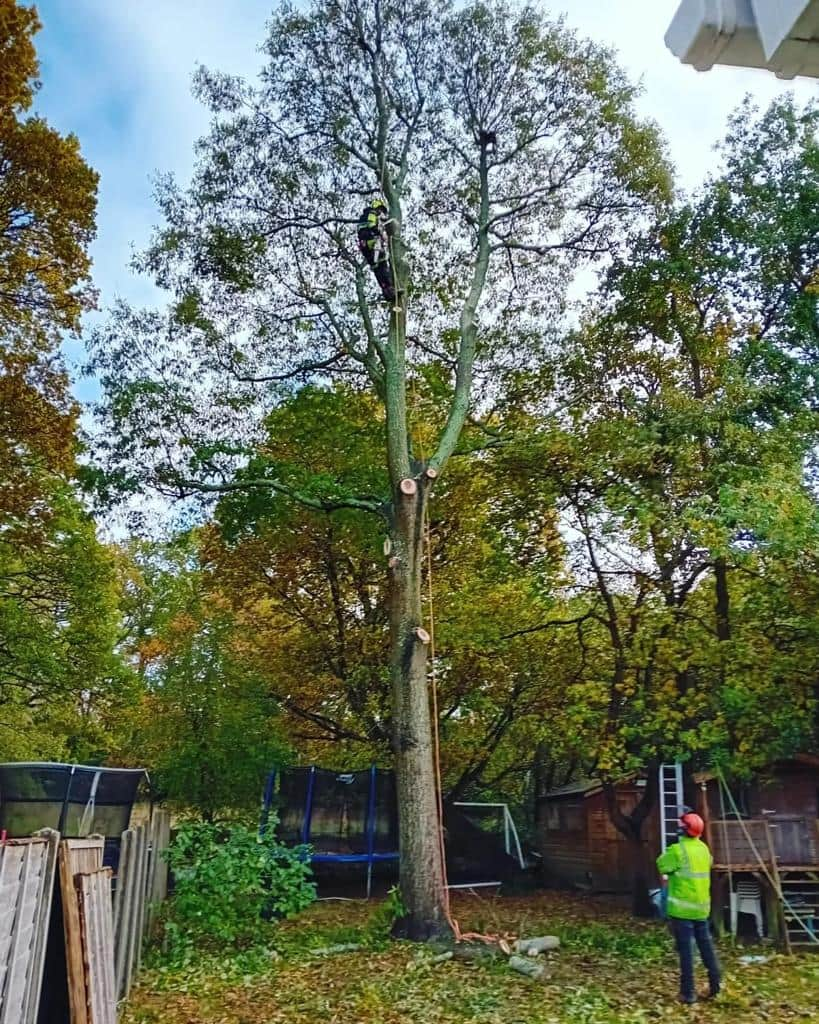
Stump grinding removes the visible remains of a felled tree by reducing the stump and accessible surface roots into small wood fragments. Once the work is complete, a mixture of wood chips and soil is usually left behind. These stump grindings can often be reused, although the most suitable option depends on how the area will be used afterwards.
Before spreading or removing the material, it is important to understand that fresh grindings gradually decompose and reduce in volume. Planning for this natural settlement helps create a tidier, more practical result.
Practical Ways to Use or Manage Stump Grindings
Stump grindings do not always need to be treated as waste. With appropriate preparation, they can be reused in several parts of the garden or removed to leave the ground ready for its next purpose.
Use the Grindings as Garden Mulch
Wood-based grindings can be spread around established trees, shrubs and planted areas. A suitable layer helps retain soil moisture, suppress unwanted growth and protect the ground from rapid temperature changes.
Avoid piling the material directly against trunks, stems or the walls of a property. Leaving a small gap encourages airflow and prevents damp material from remaining in constant contact with plants or structures.
Fresh grindings may contain soil, stones and larger pieces of wood. Raking or screening the material before use can produce a more even mulch and remove unsuitable debris.
Add Small Amounts to a Composting Area
Stump grindings contain carbon-rich woody material, making them suitable for composting when combined with greener materials such as grass cuttings and suitable garden waste. Mixing the pile and maintaining a balance between dry and moist material supports decomposition.
Because wood fragments break down slowly, adding a large quantity at once can create a dense pile that takes considerable time to mature. Using manageable amounts and turning the compost periodically usually produces a better result.
Use Them on Informal Garden Paths
Wood grindings can provide a natural surface for informal paths through planted or less frequently used areas. They can help reduce mud and define a clear walking route while gradually blending into the garden.
However, grindings are not a permanent structural surface. They will settle, decay and require occasional topping up. Areas intended for regular access, paving or heavy use need more appropriate ground preparation.
Can the Grindings Be Used to Fill the Stump Hole?
Some of the material can be returned to the depression left by grinding, but it should not be used as the only fill if a stable finished level is required. Wood fragments decompose and shrink, which can cause the surface to sink.
For a lawn or planting area, excess grindings should normally be removed before the hole is filled with suitable soil. The material may need to be added and firmed in stages to allow for settlement. This creates a more dependable base for turf, grass seed or planting.
Preparing the Area for New Turf
If the former stump position is going to become part of a lawn, leaving too many grindings beneath the surface can affect the result. As the wood decomposes, the ground may settle unevenly and create a visible hollow.
A better approach usually involves:
- Removing surplus wood fragments
- Loosening and preparing the surrounding ground
- Filling the depression with suitable soil
- Allowing for natural settlement
- Levelling the surface before laying turf or sowing seed
The suitability of the area for immediate replanting will depend on the depth of grinding and the amount of the original root system remaining underground.
Preparing for Paving or Another Hard Surface
Stump grindings should not be left beneath paving, paths or other hard landscaping. Decomposing wood does not provide the stable support required for these surfaces and could contribute to movement or sinking.
The loose organic material should be cleared away, and the area must be prepared using suitable structural materials. If future construction or landscaping is planned, discussing the intended use before stump grinding begins can help determine the necessary grinding depth and site preparation.
When Is Removal the Best Option?
Removing the grindings may be preferable when there is more material than the garden can use, when a clean planting area is required or when the ground must be prepared for another purpose.
Professional removal also saves the inconvenience of handling a large mound of mixed wood and soil. Stump grinding often creates considerably more material than expected because the original stump occupies substantial space below ground level.
Why the Intended Use of the Ground Matters
The correct way to manage stump grindings depends on what will happen next. Mulched beds can make productive use of the material, while lawns require careful soil preparation. Hard landscaping needs the organic debris removed to establish a firm base.
A professional tree surgeon can assess the stump, surrounding access and planned use of the land before starting. This helps ensure the stump is ground to an appropriate depth and the remaining material is handled effectively.
Conclusion
Stump grindings can be reused as mulch, added gradually to compost or used on informal garden paths. However, they should not be relied upon as stable backfill beneath lawns, paving or other finished surfaces because they decompose and settle over time.
EM Tree Surgery Tewkesbury provides professional stump grinding services in Tewkesbury, Gloucestershire. If an unwanted stump is preventing you from making better use of your garden, contact our team to arrange an assessment and discuss the most suitable way to prepare the area.