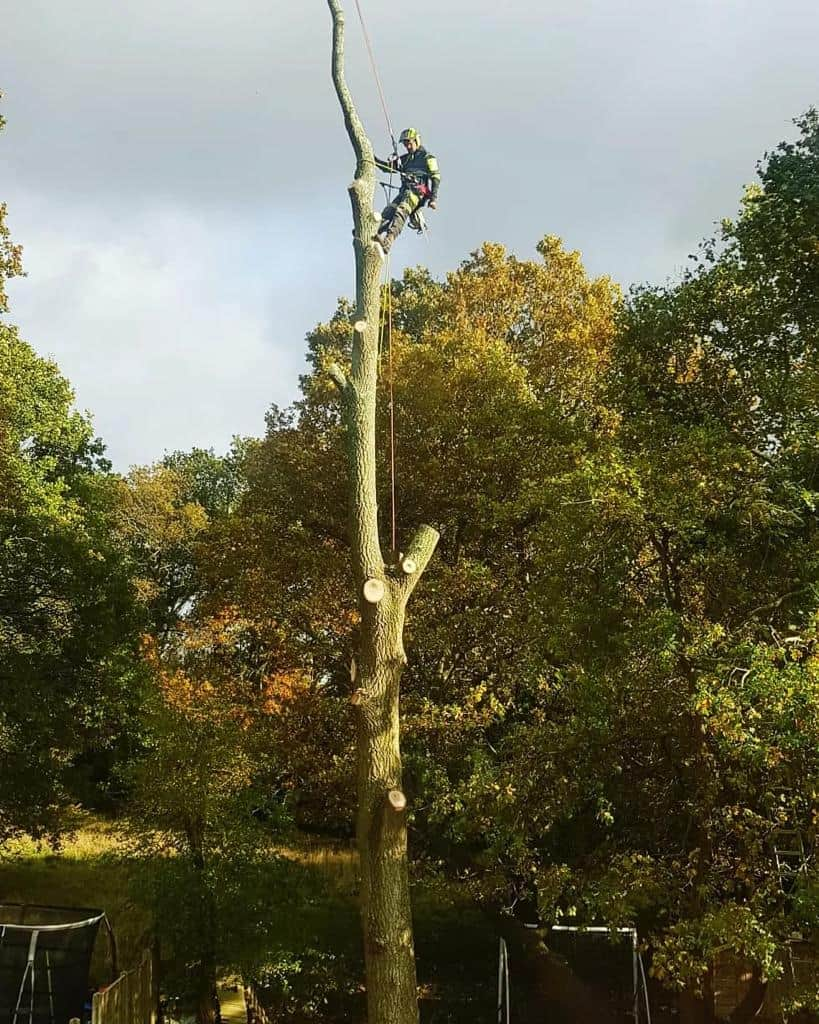
Tree pruning is not simply a matter of shortening branches. When carried out correctly, it can improve a tree’s structure, remove unsuitable growth and provide appropriate clearance around buildings, paths and other garden features.
For property owners in Tewkesbury, Gloucestershire, professional tree pruning offers a planned approach based on the tree’s species, age, condition and surroundings. This helps address specific concerns while retaining as much healthy growth as possible.
How Professional Tree Pruning Can Benefit Your Trees and Garden
Every pruning cut affects how a tree develops. Removing the wrong branch, cutting at an unsuitable point or taking away excessive growth can cause unnecessary stress and encourage weak regrowth.
A professional tree surgeon assesses the complete crown before selecting an appropriate pruning method. The aim may be to improve structure, reduce weight, increase clearance or remove dead and damaged branches.
Removing Dead or Damaged Branches
Dead branches no longer contribute to the tree’s development and can become brittle over time. Damaged limbs may also weaken further during strong winds or under the weight of wet foliage.
Professional pruning removes affected branches back to suitable points without causing unnecessary damage to surrounding growth. It also makes the remaining crown easier to inspect for other defects.
Improving the Tree’s Structure
Crossing, rubbing or poorly positioned branches can create future problems. Repeated contact may damage the bark, while weak branch unions can become vulnerable as limbs increase in size and weight.
Selective pruning can remove unsuitable growth while branches are still manageable. This encourages a clearer crown structure and reduces competition between closely positioned limbs.
Managing an Overgrown Crown
A tree that has become too large for its position may dominate the garden, restrict light or extend towards nearby structures. Crown reduction can decrease its height or spread by shortening carefully selected branches.
The work should maintain a balanced and natural outline. Excessive cutting can leave the tree stressed and encourage dense regrowth, so the amount removed must be suitable for the species and condition of the tree.
Creating Clearance Around the Property
Branches may gradually extend over roofs, paths, entrances, driveways or seating areas. Low growth can also restrict access and make routine garden maintenance more difficult.
Targeted pruning can provide suitable clearance without unnecessarily reducing the entire crown. Depending on the situation, this may involve shortening individual limbs or carefully raising the lower part of the canopy.
Improving Light Within the Garden
A dense canopy can make the surrounding garden feel dark and enclosed. Lawns and plants beneath the tree may also receive less light.
Crown thinning involves selectively removing smaller branches from throughout the canopy while retaining its general size and shape. When appropriate for the tree, this can allow more light and air to pass through without leaving large gaps or an unbalanced crown.
Reducing Excessive Weight on Long Branches
Long, heavy limbs create leverage at their points of attachment. This can be significant where branches contain weak unions, cracks or other structural concerns.
Carefully shortening selected growth can reduce end weight and the forces acting on vulnerable parts of the tree. This type of work requires detailed assessment because incorrect cuts can transfer stress elsewhere or stimulate unsuitable regrowth.
Preserving the Tree’s Natural Appearance
Good pruning should respond to the tree’s existing shape rather than imposing an artificial form. Cuts are positioned at suitable branch unions so the crown continues to look balanced after the work is completed.
This is particularly important for prominent garden trees. A professional approach can solve practical problems while retaining the character the tree contributes to the property.
Avoiding the Problems Caused by Poor Pruning
Removing too much foliage or leaving badly positioned cuts can lead to:
- weak, rapidly developing regrowth
- large wounds that are slow to close
- an uneven or unstable crown
- unnecessary stress to the tree
- repeated maintenance requirements
- loss of the tree’s natural form
Correct pruning cannot guarantee that a tree will never develop another defect, but it avoids creating preventable problems through unsuitable cutting.
Choosing the Right Pruning Method
Tree pruning is a broad term covering several different techniques. The most suitable method depends on what needs to be achieved.
A professional assessment may recommend:
- dead wood removal
- selective branch removal
- crown reduction
- crown thinning
- crown lifting
- corrective pruning for an unbalanced tree
Not every tree requires extensive work. In many cases, a focused intervention provides a better outcome than heavily reducing the whole crown.
Why Timing Matters
Tree species respond differently to pruning, and the appropriate timing can depend on the reason for the work, the tree’s condition and its growth cycle. Weather conditions and the extent of the proposed pruning also need to be considered.
A professional tree surgeon can determine when the work should be carried out and whether it would be better divided into stages rather than completed all at once.
Conclusion
Professional tree pruning can remove dead or damaged branches, improve structure, provide clearance and make an overgrown crown more manageable. Its greatest benefit comes from applying the correct technique and removing only the growth necessary to achieve a clear objective.
If a tree at your property in Tewkesbury, Gloucestershire requires professional attention, EM Tree Surgery Tewkesbury can assess its condition and recommend an appropriate pruning plan. Contact the team to arrange a professional evaluation and discuss the most suitable care for your tree.
Call us on: 01684 215 889
Click here to find out more about EM Tree Surgery Tewkesbury
Click here to complete our contact form and see how we can help with your trees needs.